If you are trying to estimate the cost to paint a 1000 sq ft house interior, you are not alone. Many homeowners want a clear answer and then realize pricing changes fast when you look at what is included. Some quotes cover walls only. Others include ceilings, trim, doors, repairs, primer, and two coat coverage for color changes.
This guide explains the cost to paint the interior of a house in plain language. It focuses on the decision points that move prices up or down, so you can compare quotes with confidence. It is written for real homes, real schedules, and real paint performance.
To go into the room-by-room pricing and options, refer article to DIY vs. Hiring a Pro: Which Is Cheaper for Interior House Painting, exploring which is cheaper DIY or hiring a professional to paint the interior of a house.
A clear starting point Typical ranges for a 1000 sq ft interior
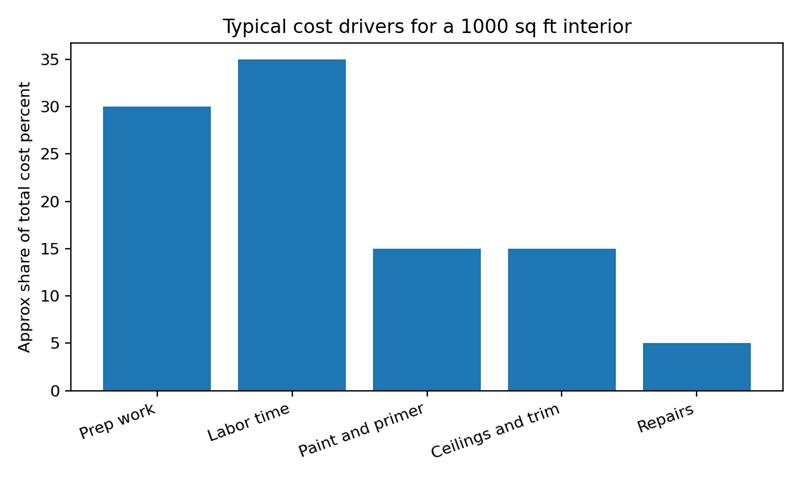
Most pricing guidance from large home improvement and cost reference sites clusters around a few core ranges. Walls only are commonly priced at about 2 to 6 dollars per square foot, depending on the market, wall height, prep needs, and paint grade. When you add ceilings and trim, the per square foot figure rises because detail work and cut lines take time.
The fastest way to avoid surprises is to ask one question first. What surfaces are included. Walls only, or walls plus ceilings, or a full scope that includes baseboards, doors, and window trim. The same home can land in very different totals based on that scope definition.
Average Interior Painting Cost for a 1000 Sq Ft House
Here is the pricing table of interior painting cost for a 1000 Sq Ft house:
|
Area or Room Type |
Average Cost Range |
Cost per Sq. Ft. |
Notes |
|---|---|---|---|
|
Bedroom (10×12) |
$300 to $700 |
$2.50 to $4.00 |
Includes walls and basic prep |
|
Living Room |
$600 to $1,200 |
$2.50 to $4.50 |
Higher cost for tall or vaulted ceilings |
|
Kitchen |
$400 to $800 |
$3.00 to $5.00 |
Extra prep for grease and stains |
|
Bathroom |
$200 to $500 |
$2.00 to $3.50 |
Moisture resistant paint recommended |
|
Hallways and Entry Areas |
$300 to $700 |
$2.50 to $4.00 |
Multiple cut lines increase labor |
|
Entire House Interior (1000 sq ft) |
$2,000 to $4,000 |
$2.00 to $4.00 |
Walls only average pricing |
|
Full Scope Interior (1000 sq ft) |
$3,500 to $5,000 |
$3.50 to $5.00 |
Walls, ceilings, and trim included |
These prices reflect typical interior painting costs based on prep work, paint quality, labor time, and room layout. Repairs, major color changes, or specialty finishes can increase the total cost.
A room by room breakdown for a 1000 sq ft home
Homeowners often think 1000 sq ft means the same job every time. In practice, the room mix matters. A two bedroom layout with a living room, kitchen, bath, and hallway has different cut lines than a three bedroom layout with two baths and more doors. Each opening adds edge work.
Bedrooms are usually the simplest rooms. They tend to have fewer cabinets and fewer moisture concerns. The cost increases when a room has heavy wall damage, glossy paint that needs degloss sanding, or multiple accent colors that require precise cut lines.
Living areas can be faster in open layouts because rolling large surfaces is efficient. They can be slower when ceilings are high or when there are many windows and built ins. Light can also reveal wall defects, which may increase prep time.
Kitchens often cost more per square foot. Walls can have grease buildup, splash stains, and more fixtures. Painters may recommend a washable finish and a stain blocking primer for the toughest spots. Cutting around cabinets and backsplashes takes time.
Bathrooms need the right coating. Moisture and steam can shorten paint life if the finish is not designed for humidity. A moisture resistant paint system can cost more, but it typically performs better and reduces early peeling.
How pros calculate interior painting pricing
Most contractors begin with paintable surface area, not just floor area. A 1000 sq ft floor plan can produce much more wall area if the home has many small rooms, hallways, or tall ceilings. Open layouts can reduce cut lines, while lots of doors and windows increase them.
Many estimates are built from one of three methods. A per square foot rate for walls. A room by room scope with line items. Or a day rate based on crew size and complexity. Some quotes combine methods, such as per square foot for walls plus a linear foot price for trim.
Materials Paint primer and what you actually pay for
Paint is usually not the biggest part of the bill, but it is the part homeowners notice first. A quality interior wall paint can cost more per gallon, yet it may cover better and hold up longer. Primer is a separate product that matters when walls are stained, glossy, or when you are shifting from dark to light.
Coverage is also more predictable than most people expect. Many paint calculators and brand guidance use about 350 to 400 square feet per gallon for finish paint, while primer often covers closer to 200 to 300 square feet per gallon depending on the surface. That means the home layout and wall texture can change the real gallons needed.
When comparing quotes, ask which product line is planned. Ask if primer is included where needed. Ask whether two coat coverage is assumed for color changes. Those three details explain a lot of price variation.
If you want a quick sense of paint quantities, a paint calculator can help estimate gallons based on room dimensions and typical coverage.
For brand guidance on estimating paint needs, a manufacturer paint calculator can also be useful when you are planning coats and sheen.
Prep work The biggest hidden cost driver
Preparation is where long lasting results are won. It is also where many low bids cut corners. Prep includes protecting floors and furniture, removing outlet covers, masking, sanding, patching drywall, caulking gaps, and spot priming.
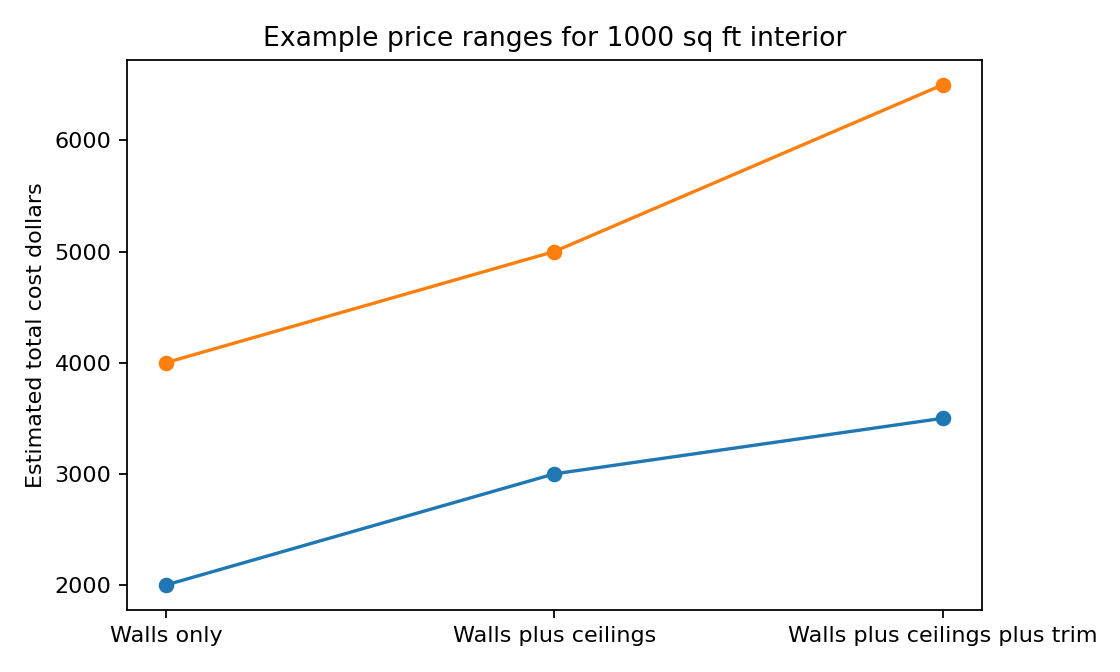
A clean wall with minor nail holes can move quickly. A wall with cracks, water stains, glossy patches, or peeling paint can take much longer. That time is labor, and labor is usually the largest cost category.
If a quote looks unusually low, check the prep scope. Ask whether patching is included. Ask whether sanding is included for sheen changes. Ask if there is stain blocking primer for water marks or smoke. Those steps change durability and appearance.
Repairs and wall condition
Repairs can be small or significant. Small repairs include nail pops, small dents, and hairline cracks. Larger repairs include repeated settling cracks, damaged corner bead, loose tape joints, or water damaged drywall.
In many homes, the first coat reveals problems you did not notice. That is why experienced crews plan time for a second round of patching and sanding. It also explains why a high quality proposal may list wall repair as an allowance or a separate line item.
For a 1000 sq ft interior, repair time can shift the estimate more than the paint brand itself. If you want pricing certainty, walk each room and list known problem areas before requesting bids.
Ceilings trim and doors add detail time
Many homeowners assume ceilings are included. Often they are not. Ceiling paint requires extra protection for floors and furniture, and it may require stain blocking if there are old water marks.
Trim work is also a major time driver. Baseboards, door casings, window trim, and interior doors require careful cut lines and often need sanding. Trim may be priced by linear foot or by room depending on the contractor.
If your goal is to control budget, clarify whether trim is included, and if so, which pieces. Painting baseboards only is different from painting all trim and doors. Quotes vary widely because that scope varies widely.
Paint grade sheen and performance choices
Paint grade is not only about cost. It is about washability, scuff resistance, and how the finish looks under light. A premium paint may reduce the need for extra coats, and it can be easier to clean.
Sheen is part of the decision. Flat and matte hide wall flaws well but can mark in high traffic zones. Eggshell is a common living area choice because it balances appearance and cleaning. Satin is often chosen for halls and kids rooms. Semi gloss is common for trim and doors because it is durable.
When you compare bids, check whether the paint grade and sheen match across quotes. If one quote uses a builder grade product and another uses a premium line, the totals will not match even if labor is identical.
Room count layout complexity and cut lines
Two homes can both be 1000 sq ft and still price very differently. The reason is complexity. A home with many small rooms has more corners, more doorways, more baseboards, and more switching between wall and trim. That slows production.
Open plans can be faster because painters can roll larger wall areas with fewer stops. Vaulted ceilings and stairwells can be slower because ladder work and reach time increase.
If your home has lots of trim profiles, crown molding, or built ins, expect more time. That time improves detail and finish quality, but it affects cost.
Scheduling and timing what changes pricing
Interior projects can be scheduled year round in most markets. Demand still changes by season. Many homeowners plan painting before holidays, before listing a home, or after a renovation. Those peaks can affect availability.
If you can be flexible, you may find better scheduling options during slower periods. Another timing factor is move in status. Painting an empty home is faster. Painting around furniture and personal items takes longer because protection and moving time increase.
If you want a smoother experience, plan your project around access. Clear small items, create a staging area, and confirm which rooms can be painted first.
A homeowner budget framework you can actually use
To budget realistically, break the estimate into four buckets. Labor time. Prep and repairs. Paint and primer. And detail surfaces like trim and doors.
Start by deciding the finish level you want. If you want walls only with minimal prep, your range is narrower. If you want a full scope repaint with trim, doors, and ceiling refresh, expect the range to widen.
Then add a contingency for surprises. Many homeowners add about 10 percent for unexpected repairs or extra primer. This keeps the project on track even if a stain appears after the first coat.
Example scopes that change the total fast
Scope option one is walls only with light prep. This is usually the lowest range. It still includes protection, minor patching, and cleanup, but it avoids heavy trim work and ceiling repaint.
Scope option two is walls plus ceilings. This often makes the home look brighter, especially if ceilings have yellowing or old stains. It also adds masking time and overhead rolling time.
Scope option three is a full refresh. Walls, ceilings, baseboards, door casings, doors, and window trim. This produces the most complete transformation, but it adds detail work. Detail work is slower than rolling walls.
Scope option four is a color change project. Dramatic color changes often require primer or an additional coat. If the home has dark tones, a shift to light neutrals can add a full extra pass.
How to compare quotes without getting misled
Ask each contractor to list surfaces separately. Walls, ceilings, trim, doors, and closets. When quotes bundle everything into one line, it is harder to compare.
Confirm the number of coats. A single coat refresh can look fine on the day of completion but fail to hide marks or patching. Two coat coverage is a common standard when you want a consistent finish.
Ask about primer. Primer may be needed for stains, new drywall, glossy surfaces, or big color shifts. If primer is excluded, it can appear later as an added cost.
Look for prep language. Patching drywall, sanding, caulking, and protecting floors should be described. If prep is vague, quality may be inconsistent.
Check paint grade and sheen. Premium washable wall paint is not the same as a lower grade product. If quotes use different product levels, totals will differ.
Maximizing your painting investment
A paint project should last. The best value comes from choices that protect the finish and reduce repaint frequency.
Invest in quality preparation. Proper prep work can extend paint life dramatically. Clean surfaces, solid patching, and correct priming help the paint bond and wear evenly.
Choose appropriate paint grades. Match paint quality to the room. Kitchens, halls, and kids rooms benefit from durable washable finishes. Lower traffic spaces can use a softer sheen if you prefer the look.
Plan for regular maintenance. Small touch ups every two to three years can keep walls looking fresh. This prevents minor scuffs from becoming a full repaint trigger.
Consider climate factors. Humidity can affect curing and long term performance. Bathrooms and laundry areas often perform better with moisture resistant formulations.
When to schedule your project
Timing affects price, availability, and the experience you have during the project.
Interior painting is available year round. Winter months are often less busy for many crews, which can make scheduling easier and sometimes improve rates.
Exterior painting has narrower ideal windows because weather matters more. Many crews prefer spring and early summer, plus early fall, when conditions are stable.
Avoid peak heat months when possible. Extreme summer heat can affect application and comfort, especially for exterior work. For interior work it can still affect drying time if the home is not well conditioned.
A simple homeowner checklist before you request a quote
-
Write down which rooms are included and which are excluded.
-
List whether ceilings are included.
-
List whether baseboards, door casings, doors, and window trim are included.
-
Mark known wall issues such as cracks, dents, water marks, or peeling.
-
Decide whether you want to keep the current colors or change them.
-
Decide the finish look you prefer such as eggshell for walls and semi gloss for trim.
-
Decide whether the home will be occupied during painting or empty.
Where professional guidance helps most
You do not need heavy branding to make a smart choice. You need a clear scope, a realistic timeline, and a finish system that fits your home. Rodriguez Painting San Antonio focuses on transparent scopes, product clarity, and prep standards that support long lasting results.
If you are comparing bids, the best question to ask is not only price. Ask what is included, what prep is planned, and what finish system is specified. That is how you protect both your walls and your budget.
At Rodriguez Painting San Antonio, call at 210-862-3090 or request a detailed interior painting quote for your 1000 sq ft home today.
Conclusion
The cost to paint a 1000 sq ft house interior is shaped by scope, preparation, wall condition, paint system, trim detail, and access. When you understand these drivers, the cost to paint the interior of a house becomes predictable rather than stressful.
A strong quote is clear about surfaces, coats, primer, repairs, and paint grade. If two bids differ, the reason is usually in the scope and prep, not in a mysterious pricing trick.
To go into the room-by-room pricing and options, refer article to DIY vs. Hiring a Pro: Which Is Cheaper for Interior House Painting, exploring which is cheaper DIY or hiring a professional to paint the interior of a house.
Ready to price your 1000 sq ft interior with a clear scope and realistic options for paint type and finish level?
Contact Rodriguez Painting Georgia or call at 210-862-3090 for a detailed estimate tailored to your location and home layout.
FAQs
How much does it cost to paint a 1000 sq ft house interior?
The cost to paint the interior of a house measuring 1000 square feet typically ranges from $2000 to $4000 for walls only. The final price depends on prep work, paint quality, number of coats, and whether ceilings or trim are included.
Why do painting quotes for a 1000 sq ft home vary so much?
Quotes vary because contractors may include different scopes. Some estimates cover walls only, while others include ceilings, doors, trim, repairs, primer, and two coat coverage. Paint grade and wall condition also affect pricing.
Is paint or labor the biggest cost factor for interior painting?
Labor is usually the largest portion of the cost to paint 1000 sq ft house interior. Prep work, sanding, patching drywall, and detailed cut lines take more time than the paint itself.
Do ceilings and trim significantly increase interior painting costs?
Yes. Painting ceilings and trim adds detail work and protection time. Ceilings often require extra masking and trim requires precision, which increases labor hours and overall cost.
Does changing wall color increase the cost to paint interior of house?
Color changes can increase cost, especially when going from dark to light shades. Primer or additional coats may be required to achieve proper coverage and an even finish.
What paint finish is best for a 1000 sq ft interior home?
Eggshell or satin finishes are commonly used for living areas because they balance appearance and cleanability. Semi gloss is typically used for trim and doors due to durability.
Can wall repairs impact the final painting price?
Yes. Cracks, nail pops, peeling paint, and water stains require repair before painting. Repair time can add noticeable cost, especially in older homes.
When is the best time to schedule an interior painting project?
Interior painting can be done year round. Winter months often provide better availability and flexible scheduling, while peak seasons may book faster.
How can homeowners control interior painting costs without sacrificing quality?
Clear scope planning helps the most. Decide which surfaces are included, choose appropriate paint grades for each room, and address wall repairs early to avoid surprise charges later.
Should I get multiple estimates before painting my home interior?
Yes. Comparing estimates helps you understand pricing differences. Make sure each quote lists surfaces, prep work, paint type, and number of coats so comparisons are accurate.