Homeowners often search for the cost to paint interior of house when they are planning a refresh for a four bedroom layout. The goal is simple. Set a budget that feels realistic before choosing colors and scheduling work.
The challenge is that painting quotes can look similar but cover different work. One quote may be walls only. Another may include ceilings, trim, doors, and repairs. Paint quality and number of coats also change the final number.
This guide explains the average cost to paint an interior 4 bedroom house, what drives pricing, and how to plan for long lasting results. It is written for homeowners who want clear ranges, practical examples, and a simple way to compare scope.
To go into the room-by-room pricing and options, refer article to DIY vs. Hiring a Pro: Which Is Cheaper for Interior House Painting?, exploring DIY vs hiring a pro which is cheaper to paint the interior of a house.
What Most Pricing Sources Say About Interior Painting
Leading home improvement pricing guides commonly describe interior painting using a per square foot range. Many cite a broad range from about $2 to $6 per square foot depending on scope and location. That range often refers to walls, with add ons for ceilings and trim.
Several sources also provide a useful reference point for planning. One widely cited benchmark places walls near about $2.75 per square foot on average. The same benchmark places walls plus trim and ceilings near about $4.70 per square foot. These are planning numbers, not promises, but they help homeowners compare proposals.
Other cost guides use a different method and quote by floor space rather than paintable wall space. For example, some national tables describe all in pricing per square foot of floor area for priming, painting, and sealing. Those numbers can look higher because they fold more steps into one figure.
The best approach is to use per square foot ranges as a starting point, then confirm your scope with a walkthrough. A four bedroom interior can swing widely based on wall condition, ceiling height, trim detail, and how many doors and closets are included.
A Simple Estimating Framework for a Four Bedroom Home
-
Define the scope. Walls only is the baseline. Walls plus ceilings plus trim is a fuller scope. Doors, closets, and built ins can be separate.
-
Choose a planning range. Many guides cite $2 to $6 per square foot for interior work. A practical midpoint used by several sources is near $2.75 per square foot for walls only. A fuller scope with ceilings and trim is often closer to about $4.70 per square foot.
-
Add condition adjustments. Drywall repair, patching, sanding, caulking, and stain blocking primer increase labor time. Texture can increase paint use.
-
Confirm coats and primer. Two coat coverage is a common expectation for a uniform finish. Color changes often require primer and sometimes an extra coat to avoid flashing.
Homes and Gardens cost to paint a room reference describing wall only and full room per square foot ranges.
Pricing Table for Common Areas and Whole Home Ranges
|
Area or Room Type |
Average Cost Range |
Cost per Sq Ft |
Notes |
|
Bedroom 10 by 12 |
$300 to $700 |
$2.50 to $4.00 |
Often includes trim and ceiling when specified |
|
Living Room |
$600 to $1,200 |
$2.50 to $4.50 |
High ceilings and open plans raise labor time |
|
Kitchen |
$400 to $800 |
$3.00 to $5.00 |
Degreasing and stain blocking primer may be needed |
|
Bathroom |
$200 to $500 |
$2.00 to $3.50 |
Moisture resistant paint is often recommended |
|
Hallway and Stairs |
$450 to $1,200 |
$3.00 to $6.00 |
Cut lines and ladder work add time |
|
Whole Home Interior |
$3,500 to $12,000 |
$2.00 to $6.00 |
Depends on scope, prep, ceilings, trim, and doors |
These ranges reflect common national guidance and the way many contractors scope interior work. Your home may land lower or higher depending on finish level and repairs.
Example Budgets for a Four Bedroom Interior
Example one. Walls only refresh. This option focuses on wall surfaces in bedrooms and main living areas. Ceilings and trim are not included. Prep is light. This is often the lowest cost approach.
Example two. Full interior reset. This option includes walls, ceilings, trim, and doors. It is common when homeowners want a cohesive finished look. It typically requires more masking, more cut in work, and more detail painting.
Example three. Targeted upgrades. This option focuses on high visibility rooms like the entry, living room, and kitchen, plus the primary bedroom. It can be a smart way to control budget while still improving daily experience.
A four bedroom floor plan also affects time. A home with many closets and doors requires more edge work. A home with long hallways and stairwells requires more ladder time and protection steps.
What Influences the Total Cost
Square Footage and Layout
Four bedroom homes vary widely in size. Some are compact. Others include a large family room, a formal dining area, and a bonus room.
Open layouts can reduce the per square foot rate because crews move efficiently with fewer stops. Tight hallways and stairwells can increase labor because the work involves more cut lines, more protection, and more ladder movement.
Ceiling height matters. Tall walls require more time for rolling and cutting. Vaulted ceilings increase setup time and can raise the rate for both walls and ceilings.
Walls, Ceilings, Trim, and Doors
Many homeowners assume an interior quote includes everything. It often does not. Walls only pricing is usually the baseline.
Adding ceilings changes the project. Ceiling repainting can improve the finished look, especially when walls go brighter, but it increases labor and materials.
Trim and doors are detail heavy. Baseboards, door frames, and window trim require steady cut lines. Multi panel doors and closet doors can add a surprising amount of time.
Prep Work and Surface Condition
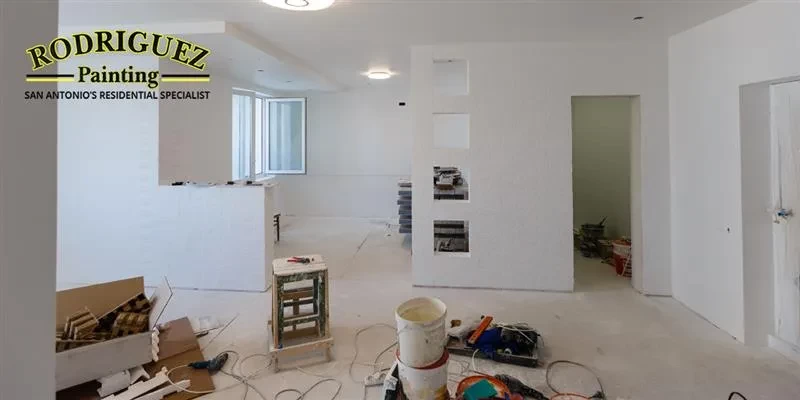
Prep work is a major driver of both quality and cost. A wall can look fine from a distance and still need patching and sanding to look smooth after paint.
Common prep steps include patching drywall, repairing nail pops, smoothing dents, sanding glossy spots, and caulking small gaps. Each step adds minutes that add up across many rooms.
Stain blocking primer is important when there are water stains, smoke marks, or marker spots. Without primer, stains can bleed through and reappear.
Paint Quality, Grade, and Finish
Paint grade affects coverage and durability. Higher quality paint often hides better and holds up longer in busy rooms.
Finish selection affects both look and washability. Eggshell is popular for living areas because it looks soft while still cleaning well. Satin is often chosen for busy hallways and kids rooms. Semi gloss is common for trim and doors.
Bathrooms and laundry rooms benefit from moisture resistant products. Kitchens often need paint that cleans easily.
Number of Coats, Primer, and Color Change
Two coat coverage is a common expectation for a uniform finish. Some colors cover in two coats easily. Others do not.
Color changes can add steps. Dark to light transitions may require primer plus two finish coats. Deep colors sometimes require additional coats for even appearance.
Ask every contractor to confirm what coat count is included. A cheaper quote can become expensive if it excludes primer or assumes one coat.
Labor Rates and Work Method
Labor is often the largest portion of the price. Many cost guides point out that labor and prep make up most of a professional paint job.
Rates vary by city and season. Crew size also matters. A larger crew can finish faster, but the cost depends on how the contractor prices the scope.
Good scheduling helps. When rooms are clear and access is simple, crews work more efficiently. That efficiency can reduce total labor time.
Protection, Furniture Moving, and Cleanup
Protection is part of a quality job. Floors, furniture, counters, and fixtures need covering and careful masking.
Protection takes time, but it prevents paint splatter and reduces risk. It also supports cleaner lines around trim and edges.
Cleanup matters. A professional finish includes touch ups, removal of masking, and a final walkthrough to confirm coverage and cut lines.
Project Planning Tips for a Four Bedroom Interior
List rooms in priority order. Many homeowners start with bedrooms and main living areas, then add hallways and stairwells for a cohesive look.
Decide what happens with ceilings. A fresh ceiling can make walls look cleaner, especially under bright lighting.
Confirm trim scope. If trim is included, ask whether it is painted with a durable finish and how many coats are planned.
Choose paint by room use. Bedrooms and living areas often work well with eggshell or satin. Trim and doors commonly use semi gloss for durability.
Schedule a walkthrough. A walkthrough is the fastest way to confirm repairs, stains, and scope. It also helps confirm timeline and crew size.
Maximizing Your Painting Investment
Interior painting is an investment in comfort and long term upkeep. The best value comes from a finish that stays intact, cleans easily, and resists scuffs.
Long lasting results usually come from three choices. Quality preparation. The right paint grade. A scope that matches how the home is used.
Best Practices for Long Lasting Results
Invest in quality preparation. Good prep improves adhesion and reduces early failure. In many professional workflows, prep quality can double how long a finish holds up before it needs a full repaint.
Choose appropriate paint grades. Busy areas need washability and scuff resistance. Bathrooms and laundry rooms benefit from moisture resistance.
Plan for regular maintenance. Light touch ups every few years can keep high traffic areas looking clean without a full repaint.
Consider climate factors. Moisture and humidity affect bathrooms, kitchens, and laundry rooms. Moisture resistant formulations help the finish hold up better.
When to Schedule Your Project
Interior painting can be scheduled year round. Many homeowners find that winter offers better availability and sometimes better pricing because demand is lower.
Avoid peak heat months when possible for exterior work. High heat can affect application time and worker pace, and it can make surface temperatures too high for ideal results.
Choosing the Right Painter for a Four Bedroom Interior
A good painter makes the scope clear. The proposal should list rooms, surfaces, coat count, primer steps, and what is included for trim, doors, and ceilings.
Look for a process that includes protection, surface prep, and a final walkthrough. Those steps are often the difference between a quick repaint and a durable finish.
Rodriguez Painting San Antonio supports homeowners who want clear scope, durable materials, and tidy project flow. The goal is a finish that looks consistent from room to room.
Conclusion
The average cost to paint interior 4 bedroom house depends on scope, prep, paint quality, coat count, and local labor. Per square foot ranges help you plan, but the most accurate number comes from a walkthrough that confirms repairs, ceilings, trim, doors, and primer needs.
When you compare proposals, focus on what is included. Confirm prep steps. Confirm primer. Confirm coat count. That clarity is what turns a price into a reliable plan.
To go into the room-by-room pricing and options, refer article to DIY vs. Hiring a Pro: Which Is Cheaper for Interior House Painting?, exploring DIY vs hiring a pro which is cheaper to paint the interior of a house.
For a written interior estimate tailored to your four bedroom home.
Contact Rodriguez Painting San Antonio or call at 210-862-3090 for a free interior painting quote.
FAQs
How do I estimate the cost to paint interior of house for a four bedroom layout?
Start by defining scope. Walls only is a baseline. Adding ceilings, trim, and doors increases cost. Use a planning range like $2 to $6 per square foot, then confirm details with a walkthrough for repairs and coat count.
What raises the average cost to paint interior 4 bedroom house the most?
Heavy prep work, tall ceilings, lots of trim detail, and major color changes usually raise cost the most. Adding ceilings and doors also increases labor time.
Is premium paint worth it?
In many homes, yes. Premium paint often covers better and holds up longer, especially in busy rooms. It can reduce touch ups and extend the repaint cycle.
How many coats should I expect?
Two coats is a common expectation for uniform coverage. Primer may be needed for stains or major color change. Ask for coat count in writing.
How can I compare quotes fairly?
Compare scope line by line. Confirm what rooms and surfaces are included, whether primer is included, how repairs are handled, and what finish level is planned.