If your home is roughly 1,200 square feet, you’re in a very common size bracket for single-story homes, townhomes, and compact condos. That’s good news, because pricing benchmarks are clearer—and planning is easier. Still, there isn’t a one-number fits all answer. The cost to paint interior of house depends on:
-
Paintable square footage (walls only vs. walls + ceilings + trim)
-
Wall/ceiling height and layout (vaulted spaces cost more)
-
Surface prep (patching drywall, sanding, caulking, stain-blocking)
-
Paint system (primer, 1-coat vs. 2-coat coverage, low-VOC/premium lines)
-
Regional labor rates (San Antonio vs. Austin/Dallas can differ slightly)
In and around San Antonio, TX, recent guides and local contractors commonly quote ~$2.50–$4.50 per sq. ft. for interior work, depending on prep, heights, and finish levels.
When you add ceilings, trim, doors, or extra prep, totals climb. Many room-level guides also break out labor at about $1–$3 per sq. ft. for common rooms.
Understanding the importance of interior painting
Interior painting isn’t just cosmetic. Fresh coatings protect drywall from humidity and everyday wear, make cleaning easier (especially using washable satins/semi-gloss in high-touch areas), and can lift perceived value. The finish system you choose (primer + 2 coats for color change vs. maintenance refresh with one coat) directly affects durability and long-term cost of ownership.
Neutral, broadly appealing palettes also help homes show better—useful if you plan to sell in the next few years.
Average cost to paint a 1,200 sq. ft. house interior
Most homeowners want a quick range before they dive into details. Here’s a planning lens for a 1,200 sq. ft. home:
-
Walls only (standard 8'–9' ceilings): ~$3,000–$4,800 (assuming $2.50–$4.00/sq. ft. of paintable wall area; wall area is larger than floor area; estimates here translate common national $/sf ranges to a 1,200-sf footprint with typical room mix and two-coat coverage in most rooms). Sources place national ballpark wall-only figures at $2–$6/sf, with local San Antonio ranges clustering toward $2.50–$4.50/sf.
-
Walls + ceilings + trim: Add 30–60% depending on the number of doors, window casings, crown/base, and ceiling complexity (vaults, coffers). Many national estimates land near $4–$5/sf when ceilings/trim are included.
-
Room-mix impact: Kitchens and baths run higher per square foot (grease, moisture, stain-blocking primer). Bedrooms and hallways trend lower. Labor is often $1–$3/sf just for walls, higher with ceilings/trim.
These ranges assume standard prep (filling nail holes, light sanding, minor caulk). Heavier repairs (skim coating, patching large cracks, repairing settlement damage) add cost and time.
According to HomeAdvisor, full-home interior paint projects average about $2,022 nationally, commonly $2–$6 per sq. ft. depending on scope and complexity.
Ranges reflect typical 2025 market averages and are not a quote. Always verify locally.
|
Area / Room Type |
Average Cost Range |
Cost per Sq. Ft. |
Notes |
|---|---|---|---|
|
Bedroom (10×12) |
$300–$700 |
$2.50–$4.00 |
Includes standard patching; add for ceiling/trim |
|
Living Room |
$600–$1,200 |
$2.50–$4.50 |
Wall height & open plans increase cost |
|
Kitchen |
$400–$800 |
$3.00–$5.00 |
Extra prep (de-glossing, stain-blocker) |
|
Bathroom |
$200–$500 |
$2.00–$3.50 |
Moisture-resistant paints |
|
Entire House (1,500 sq. ft.) |
$2,500–$4,000 |
$2.50–$3.50 |
National benchmark example |
The last row is a national example to help scale your own project. National ranges cluster around $2–$6/sf, with many guides presenting similar patterns.
Factors that influence interior painting costs (for 1,200 sq. ft. homes)
Scope (walls vs. ceilings vs. trim)
Scope defines what’s included in the quote. Walls are baseline; ceilings add ladder work, stains, and texture issues; trim/doors require sanding, caulking, and durable enamel. Each layer increases masking, materials, and labor hours. Clarify counts (rooms, doors, windows), heights, and finish levels to price accurately and prevent change orders.
Wall condition and prep
Wall condition drives labor and materials. Pros repair nail pops, cracks, dents, and failed tape; skim or sand texture; caulk gaps; spot- or full-prime for adhesion, stain-blocking, and color changes; and degloss glossy surfaces. Heavier prep increases coats required, extends timeline, and raises per-square-foot costs after masking and surface cleaning.
Paint system and sheen
Paint system refers to primer plus one or two finish coats tailored to surface condition and color change. Proper systems improve adhesion, coverage, and durability. “Sheen” is gloss level—matte/eggshell hide flaws; satin resists stains; semi-gloss suits trim/doors; gloss is hardest. Choose by room traffic, moisture, cleanability, and touch-up needs.
Heights and layout
Ceiling height and room layout directly affect interior painting cost. Taller walls, vaulted ceilings, stairwells, and open floor plans demand ladders, staging, and longer cut-in time. Complex geometry increases masking and edging, raises paint consumption, and slows production rates—so labor hours, safety setup, and per-square-foot pricing typically climb significantly overall.
Regional labor and seasonal timing
Labor rates vary by region due to local wages, demand, and contractor availability. Urban areas or high-cost metros typically charge more. Seasonal timing also shifts pricing: spring and summer book quickly, raising bids; late fall and winter can unlock discounts, faster scheduling, and promotions, especially for interior-only projects, and timelines.
Home interior painting options
-
Good–Better–Best paint lines: Premium, low-VOC products cost more upfront but reduce recoat frequency and improve washability—especially important for families with kids/pets.
-
Primer strategy: Spot priming over repairs vs. full prime for color changes.
-
Coat count: True two-coat systems deliver color accuracy and scrub resistance; one-coat refreshes can work if color and condition allow.
-
Finish plan: Eggshell or matte on big wall fields; satin/semi-gloss on baths, kitchens, trim, and doors.
-
Color approach: Neutrals broaden appeal and help with resale; accent walls or deep tones raise coat count but add design impact.
Detailed cost modeling for a 1,200 sq. ft. home
Below is an illustrative breakdown using commonly reported market ranges. Your numbers will vary by scope and site conditions:
-
Walls only: Assume ~1,200–1,600 paintable wall sq. ft. depending on layout. Using $2.50–$4.00/sf → $3,000–$6,400. San Antonio quotes commonly sit in the lower-to-mid part of that band for standard 8'–9' homes with average prep.
-
Ceilings: Flat ceilings often price lower per sf than walls; textured/coffered cost more. Add $300–$800 for a small-to-mid home depending on rooms and heights.
-
Trim/doors: Linear-foot pricing or piece-rate (e.g., per door) is common; budget $300–$900 for typical 1,200-sf homes with baseboards, 7–10 doors, and window casings. (Local line-item examples show per-door/per-foot pricing.)
-
Repairs/prep: Light prep built into base bid; heavier patchwork and stain-blocking are usually add-ons ($150–$600+ depending on severity).
Local considerations in and around San Antonio, TX
-
Humidity & kitchens/baths: Moisture management matters—favor mildew-resistant, low-VOC coatings in baths and kitchens.
-
Seasonality: Spring waits can be longer; late fall/winter sometimes offers better scheduling and promotions.
-
Market baseline: Local articles and contractors frequently cite $2.50–$4.50/sf for interiors; large color changes, vaults, and extensive trim push higher.
Materials & labor: what’s inside a professional estimate
Labor is the biggest slice. Room cost guides commonly place labor at $1–$3/sf for walls (higher with ceilings/trim). Materials include:
-
Paint (often 2–4+ gallons for walls on a 1,200-sf home, more with ceilings/trim)
-
Primer (full prime for new drywall or big color changes; spot-prime repairs)
-
Caulk/patch/compound (fills, skim/feathering, sandpaper)
-
Consumables (plastic, tape, masking paper, trays, rollers, sleeves, brushes)
Material quality matters: premium, low-VOC lines cost more but lower maintenance and improve washability—key for hallways, kids’ rooms, and doors/trim.
Average interior painting cost (room by room examples)
Let’s translate a 1,200-sf home into common spaces (these are illustrative, based on national + local patterns):
-
2 bedrooms (10×12): $300–$700 each (walls only) → $600–$1,400 total
-
Living room: $600–$1,200 (open plans/high walls increase cost)
-
Kitchen: $400–$800 (de-glossing and stain-blocking)
-
Hallways: $250–$600 (lots of cut-in; doors/trim add cost)
-
Bathrooms (x2): $200–$500 each → $400–$1,000
Add ceilings/trim/doors and heavier prep to reach a realistic whole-home total. These bands align with widely published national ranges.
Interior painting project planning
-
Scope & walkthrough: Decide walls only or walls + ceilings + trim. Identify repairs and color changes.
-
Product selection: Choose sheen by space (eggshell/matte for living areas; satin/semi-gloss for baths, kitchens, trim, doors).
-
Color strategy: Confirm samples in daylight and at night; deep hues typically require an extra coat.
-
Protection & prep: Move/cover furniture, mask floors and fixtures, patch/prime repairs.
-
Application & cure: Two thin, even coats beat one heavy coat; follow manufacturer dry times for re-coat and cure before heavy cleaning.
Home interior painting ideas
-
Whole-home refresh: Soft neutrals (warm whites, greige) unify rooms and make small spaces feel larger.
-
Accent strategy: One feature wall per major space keeps costs in check while adding depth.
-
Trim contrast: Clean white semi-gloss on base/casing brightens and frames wall color.
-
Ceiling lift: Slightly lighter ceiling shade can visually increase height.
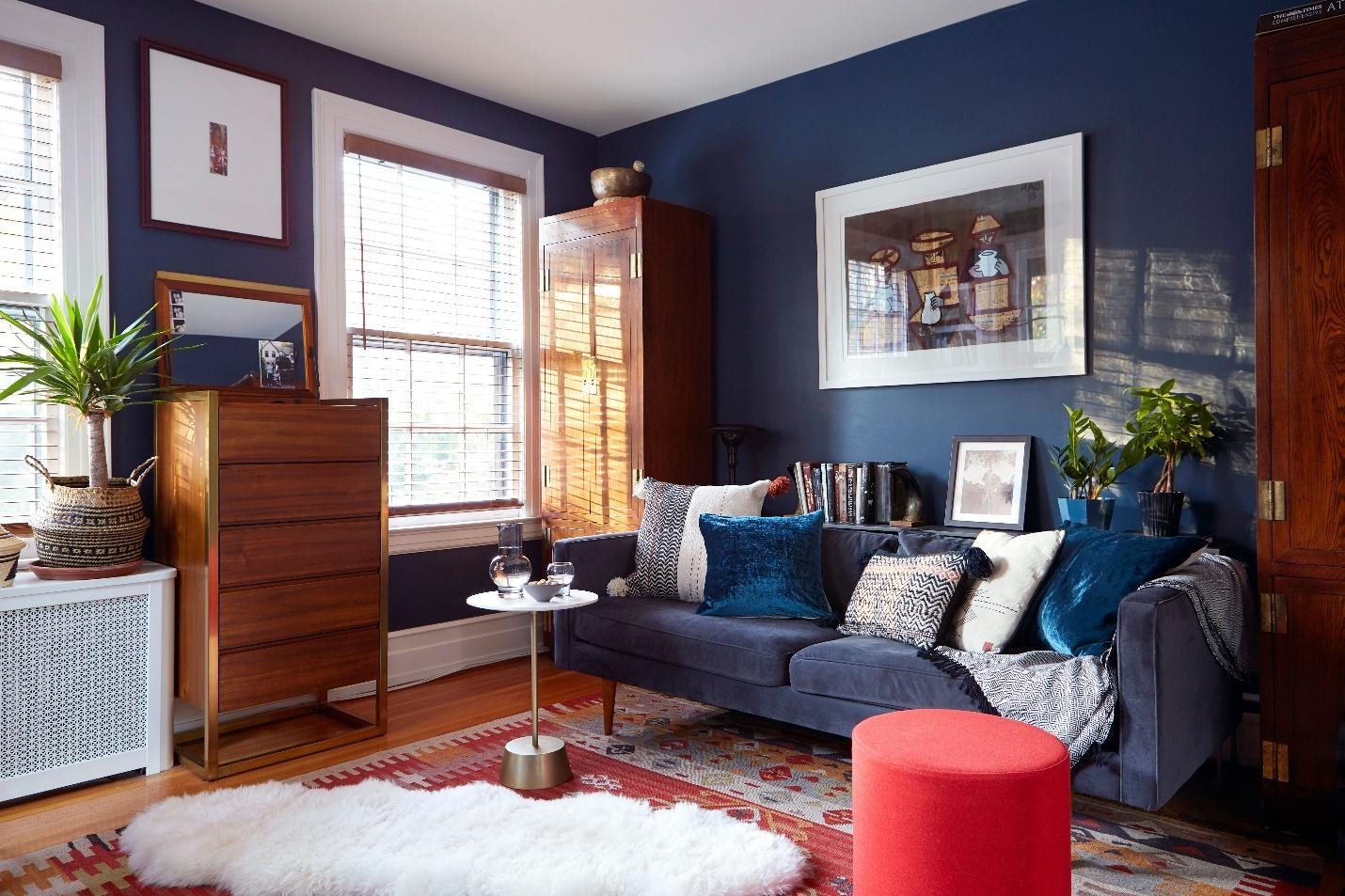
The future of interior painting costs
Expect steadier low-VOC adoption, better scrubbable finishes at mid-tier price points, and incremental labor increases tied to wages and demand. Neutral palettes remain strong for resale; design-forward homes still blend feature walls and texture. Market-wide averages remain anchored by $2–$6/sf national baselines, shifting with scope and prep.
At Rodriguez Painting San Antonio you can hire our professional painters for a quick scope review and timeline, or request a free estimate. Call us at 210-862-3090 and get a free quote today.
Conclusion
For a 1,200-sq.-ft. home, the cost to paint the interior of a house hinges on scope, prep, and finish level far more than a single “price per square foot.” National ranges of $2–$6/sf set the table; local San Antonio projects often sit near $2.50–$4.50/sf for standard wall scopes, climbing with ceilings, trim, repairs, and design features.
With smart planning, clear scope, and the right products, you’ll get a durable finish that’s easier to clean, looks better longer, and supports resale value.
To go into the room-by-room pricing and options, refer article to DIY vs. Hiring a Pro: Which Is Cheaper for Interior House Painting?, exploring whether to hire professional painters or do it yourself.
Ready to price your 1,200-sq.-ft. interior accurately?
Contact Rodriguez Painting San Antonio or call now at 210-862-3090 for a free interior painting quote in San Antonio.
FAQs
What’s the average cost to paint a 1,200 sq. ft. house interior?
For walls only, many homeowners land around $3,000–$4,800 depending on layout, heights, and prep. Adding ceilings/trim increases totals.
How much of that is labor vs. materials?
Labor is the bigger share. Room guides commonly cite $1–$3/sf just for walls; ceilings/trim add more labor per foot.
Do dark colors cost more?
Often yes—two-coat minimum is standard, but bold color changes may need an extra pass or specialized primer.
Which sheens last longer?
Satin/semi-gloss are more washable in high-touch spaces (kitchens, baths, doors/trim). Eggshell/matte reduce glare in living areas.
Can I paint in winter?
Absolutely—interior work is year-round. Off-season scheduling can be easier and sometimes more economical.